




 Last Updated: December 19, 2025
Capgemini says, “By 2028, there is an expected increase in revenue and cost savings upto $450 billion in economic value by AI agents.”
This has brought a lot to the plate for businesses, from automating operations to increasing efficiency and productivity. Now, in order to invest in AI agents, it is imperative for decision makers to stay updated on the latest trends. This will help them to make informed decisions that will set them on a successful trajectory.
In this blog, we are going to discuss the top 7 Agentic AI trends that will redefine the future in 2026. So, without further ado, let’s dive into them.
- Domain-specific Large Language Models (LLMs)
- Multiagent Systems for Autonomous Coordination
- Cognitive Workflow Intelligence
- Explainable Autonomy in Agentic AI
- Multimodal Reasoning and Action
- Human-AI Hybrid Agency
- Edge Intelligence for Low-latency Agents
- Final Thoughts
1. Domain-specific Large Language Models (LLMs)
According to Gartner, “By 2028, half of the gen AI models will become domain specific.”
AI agents trained on generic LLMs fall short for specialized tasks. Domain-specific LLMs are going to fill in this gap, providing higher accuracy, lower costs, and better compliance. These LLMs are trained on specialized data for industries such as healthcare, finance, manufacturing, and telecommunications.
These domain-specific LLMs improve the AI agents’ ability to understand nuanced terminology, regulatory frameworks, and domain-specific workflows. For leaders, this shift signifies faster deployment, increased reliability with these models, and risk reduction when using Agentic AI.
2. Multiagent Systems for Autonomous Coordination
It is anticipated that “The global market of multi-agent systems will grow significantly between 2025 and 2034, hitting USD 184.8 billion by 2034.”
Enterprises are moving towards multi-agent systems: ecosystems where multiple AI agents collaborate, negotiate, and coordinate within workflows independently. These Agentic workforces excel in areas that require distributed intelligence, such as:
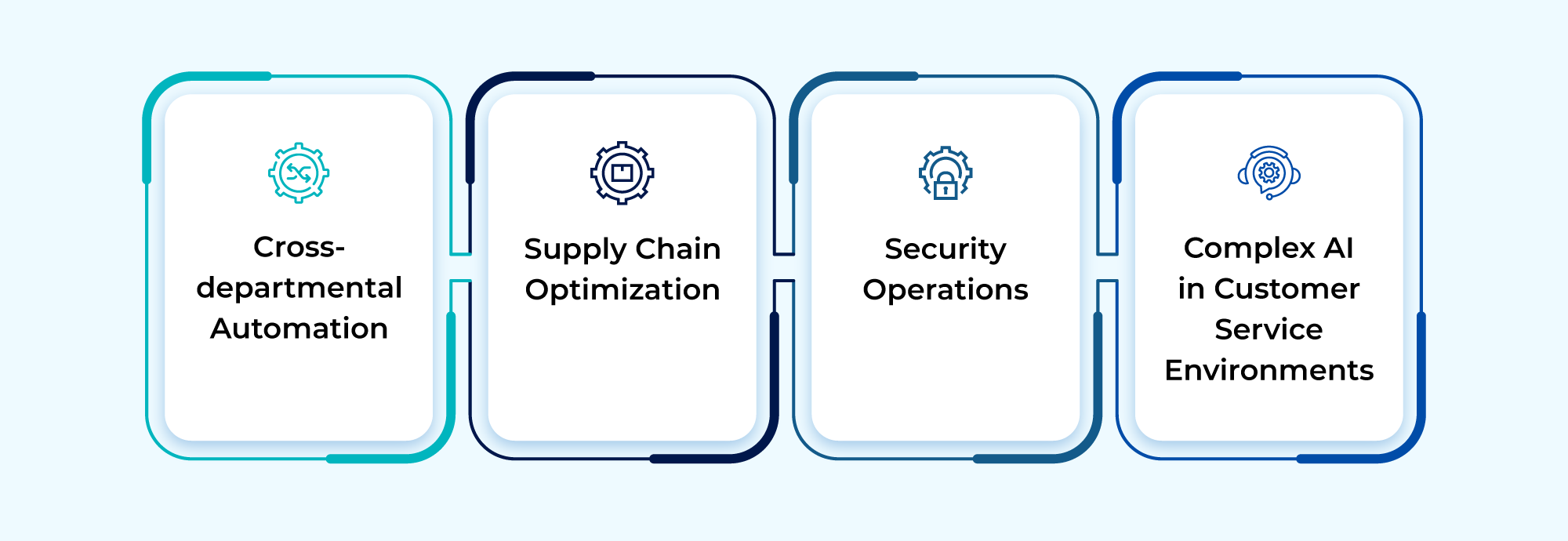
This multi-agent coordination with AI agents with specialized capabilities amplifies the efficiency. For business leaders, value is clear: multi-agent ecosystems unlock scalable autonomy, making Agentic AI operationally transformative.
Additionally, we’re setting foot into the future where multiple agentic AI systems will coordinate with each other, which will increase intra-collaboration.
3. Cognitive Workflow Intelligence
In 2026, cognitive workflow intelligence will redefine support operations. This refers to intelligence where AI agents are capable of not only observing but also self-optimizing systems to understand, manage, and improve entire workflows end-to-end.
These AI agents will provide real-time process insights, identifying bottlenecks, redesign workflows without human prompting, and even creating feedback loops for dynamically adjusting. This makes AI more strategic, transparent, and capable of complex goal-oriented actions.
These systems combine:
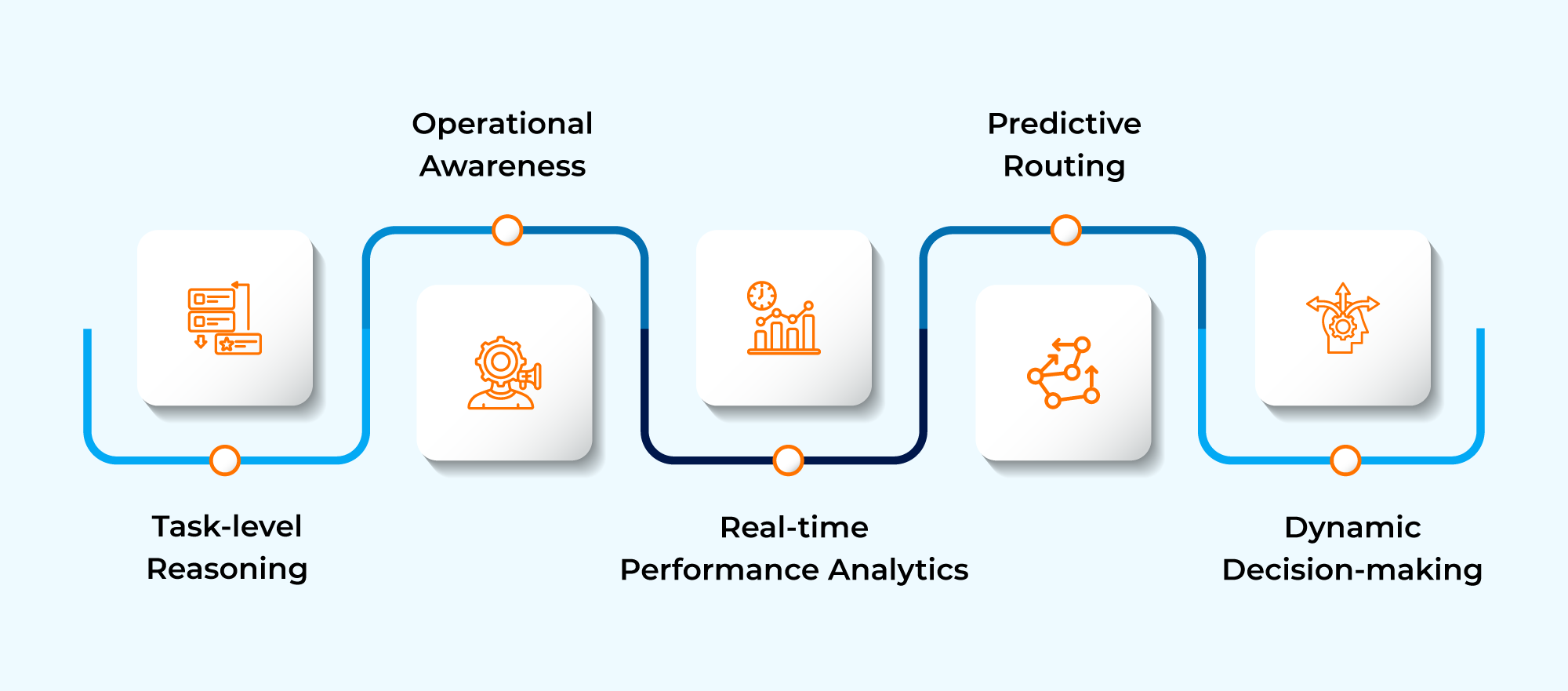
This trend will dramatically boost enterprise agility as Autonomous AI evolves from executing instructions to shaping organizational workflows.
4. Explainable Autonomy in Agentic AI
With Agentic AI gaining more control and independence, transparency becomes non-negotiable. Now, the leaders look forward to understanding how explainable, traceable, and auditable these AI agents are.
This is the foundation of explainable autonomy, which takes into consideration the interpretability of Autonomous AI. It focuses on:
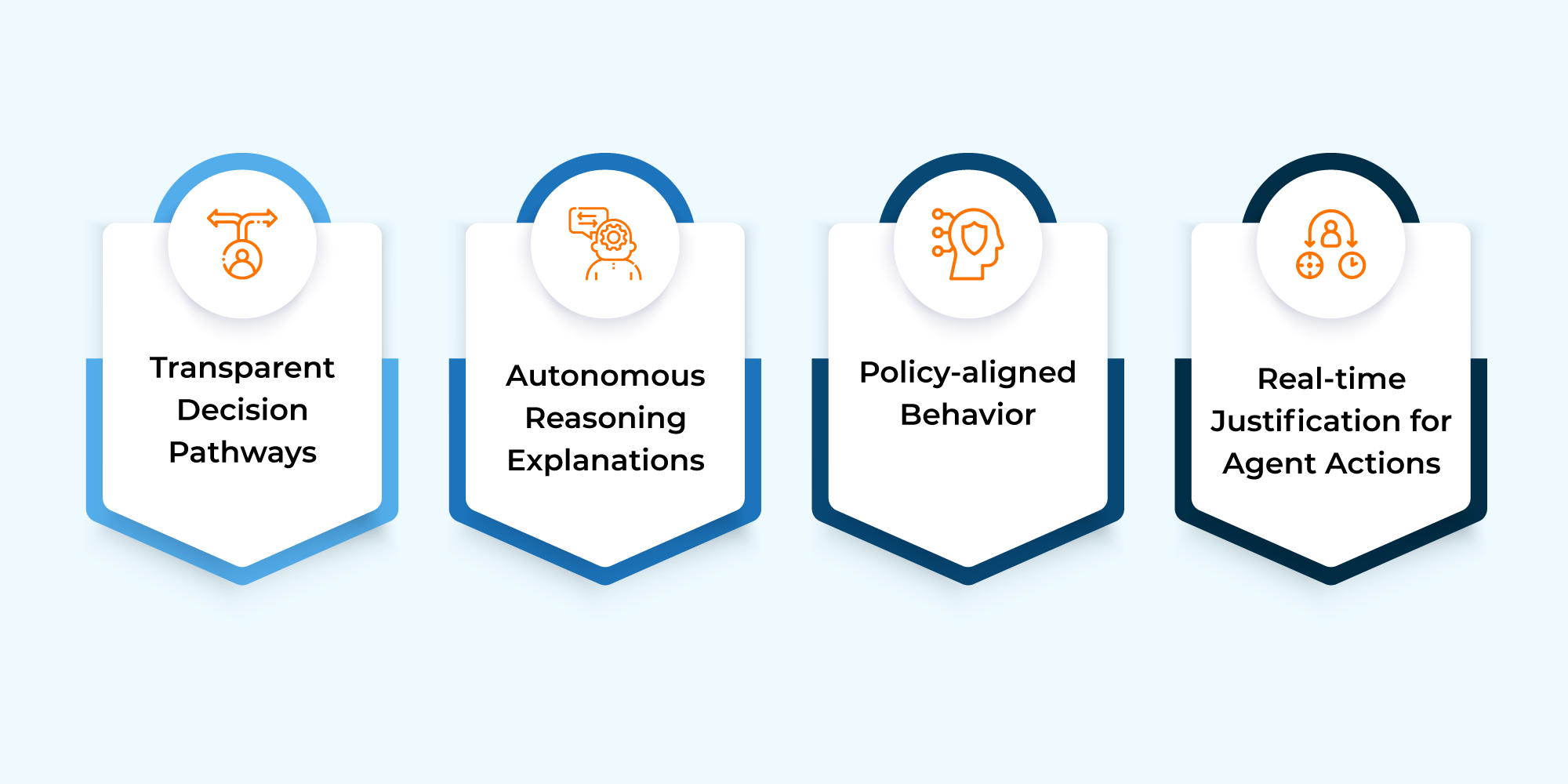
Explainable autonomy bridges the gap between autonomy and accountability. This will provide a clearer picture to the leaders of the outcomes of AI agents and the triggers that influenced their decisions.
In 2026, this trend will emerge as a core pillar of enterprise AI governance.
5. Multimodal Reasoning and Action
In 2025, we’ve seen AI interactions taking a multimodal turn with images, voice, and video-based interactions at some level. Now, 2026, is the year of multimodal reasoning and action, where AI agents will synthesize information across various formats to execute complex tasks.
This includes:
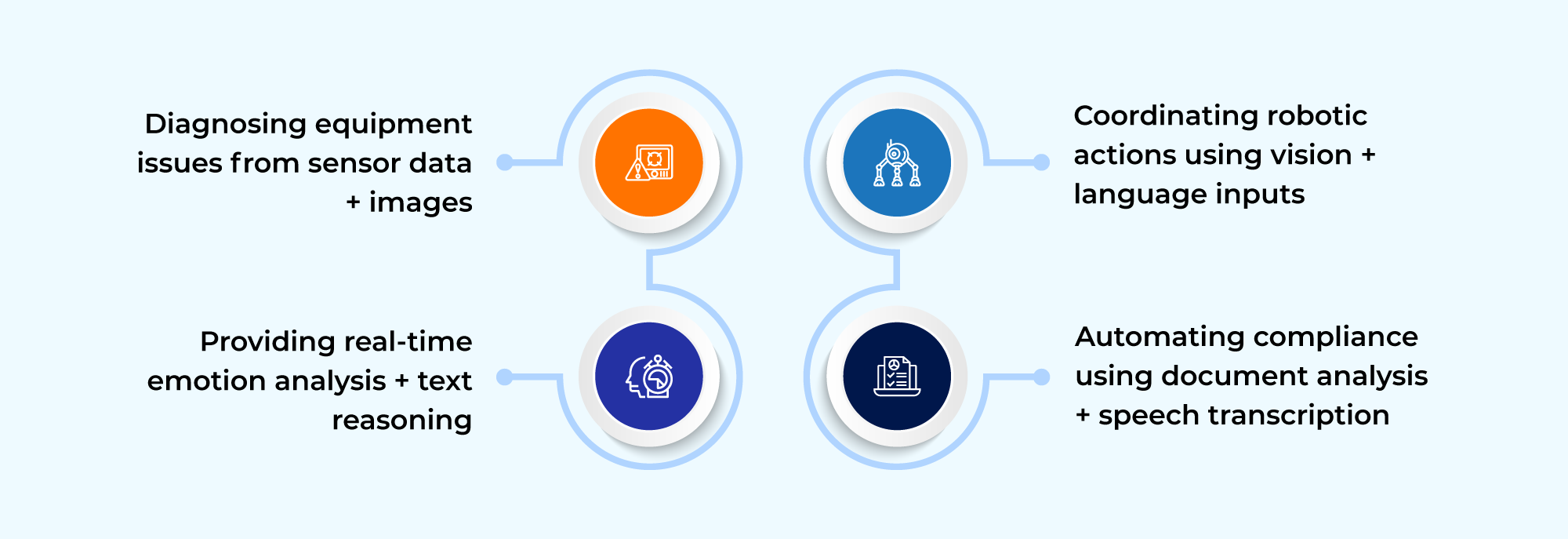
In 2026, multimodality will no longer be about richer interaction but about richer autonomy. As a result, multimodal Agentic AI systems can operate with greater awareness, nuance, and efficiency.
6. Human-AI Hybrid Agency
Capgemini predicted, “By 2028, the AI agents will act as a team member with human teams within 38% of organizations.”
Agentic AI brings a higher level of autonomy, which calls for human oversight in operations. In 2026, Human-AI hybrids will be on the rise, where humans and AI agents will together shape decisions, actions, and outcomes.
Hybrid agency creates a balanced approach:
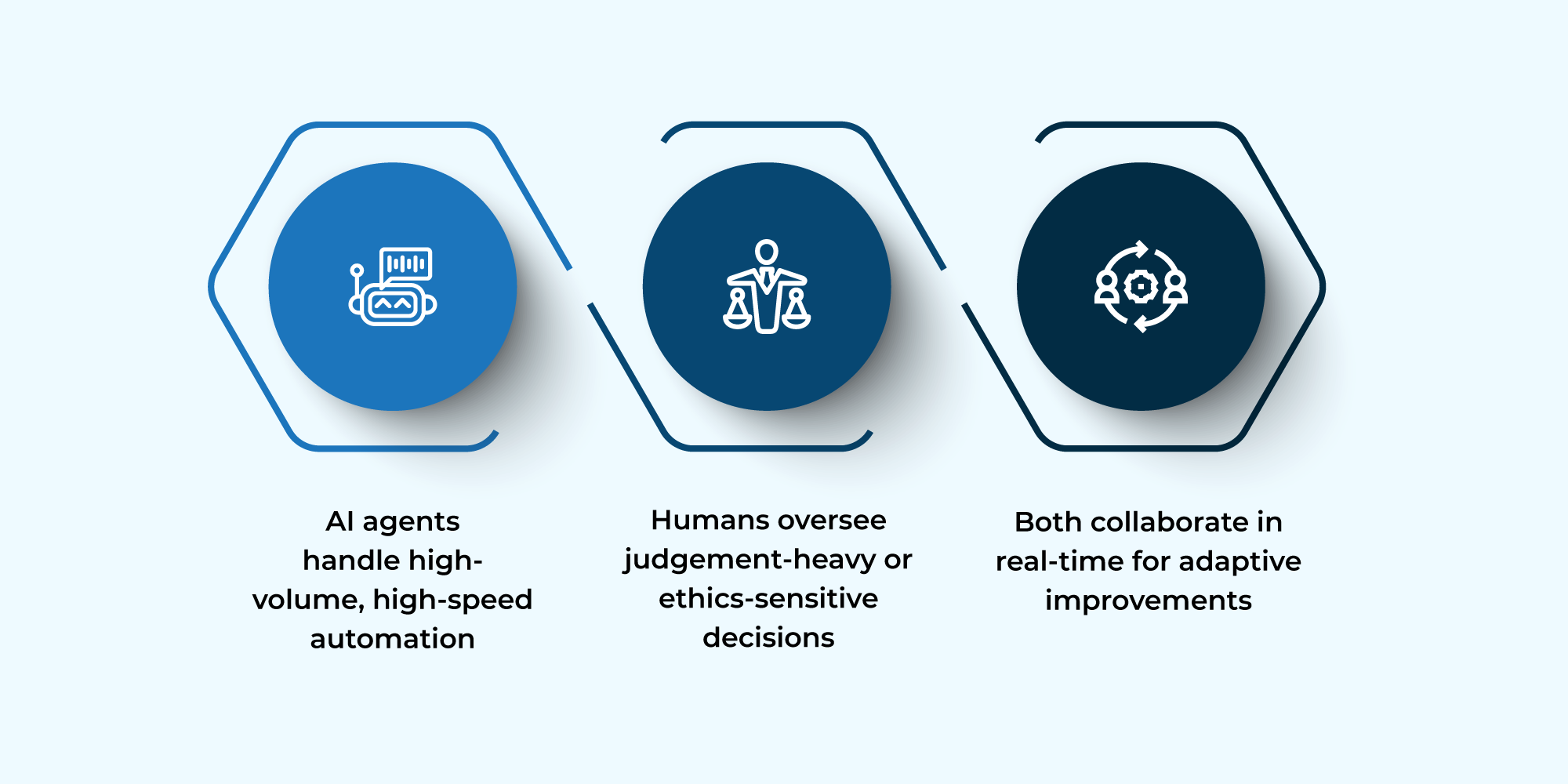
This will strengthen trust while aligning AI agents’ behavior with organizational values, ensuring safety even as Autonomous AI grows more independent. It empowers business leaders to leverage the strengths of Human-AI collaboration while maintaining full control over strategic decisions.
7. Edge Intelligence for Low-latency Agents
With organizations deploying more AI agents into operational, customer-facing, and field environments, cloud-only inference becomes limiting. This fuels the rise of edge intelligence, where Agentic AI will run directly on devices, sensors, and local infrastructure.
Edge-based Agentic AI enables:
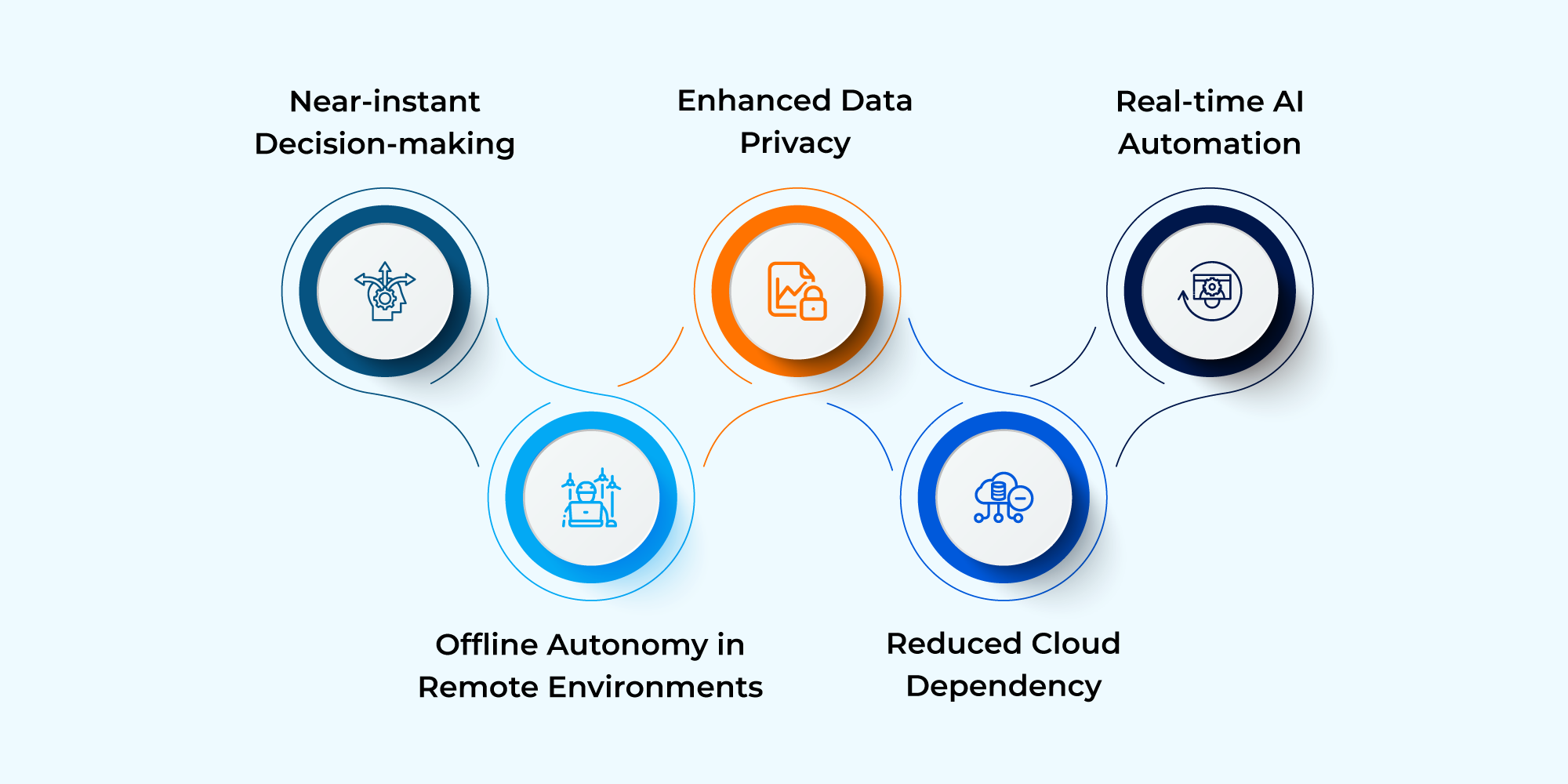
Edge intelligence will empower Agentic AI to function with unprecedented speed and reliability. The move toward hybrid compute, combining edge + cloud, will become a top priority for leaders seeking scalable, secure autonomy across their operational footprint.
Final Thoughts
The above agentic AI trends indicate a promising future ahead. Decision makers should see it as a restructuring of how work gets done, decisions are made, and intelligence flows across the enterprise.
Those who invest early in autonomy, transparency, and hybrid intelligence will lead the industries defining the next decade. So, rewrite the success for your business while implementing Agentic AI that is upgrading on time.
If you want to see a much clearer picture of how it will adjust in your support workflows, connect with our experts today


